✉ rankandrent2+ev-charger-tauranga@gmail.comMon–Fri: 8 AM–6 PM · Sat: 9 AM–4 PM · Sun: Closed (NZ Time)
Home Services Home EV Charger Installation EV Charger Installation Cost Guide Tesla Wall Connector Installation Evnex Charger Installation Wallbox Charger Installation Zappi Charger Installation Switchboard Upgrade for EV Charging Solar EV Charger Pairing Commercial EV Charger Installation EV Charger Repair Service Areas EV Charger Installation Papamoa EV Charger Installation Mount Maunganui EV Charger Installation Bethlehem EV Charger Installation Pyes Pa EV Charger Installation Tauriko EV Charger Installation Greerton EV Charger Installation Welcome Bay EV Charger Installation Otūmoetai About Blog Contact ☎ Call Now
Solar EV Charger Pairing in Tauranga
Home / Services / Solar EV Charger Pairing

Solar and EV Charger Pairing in Tauranga

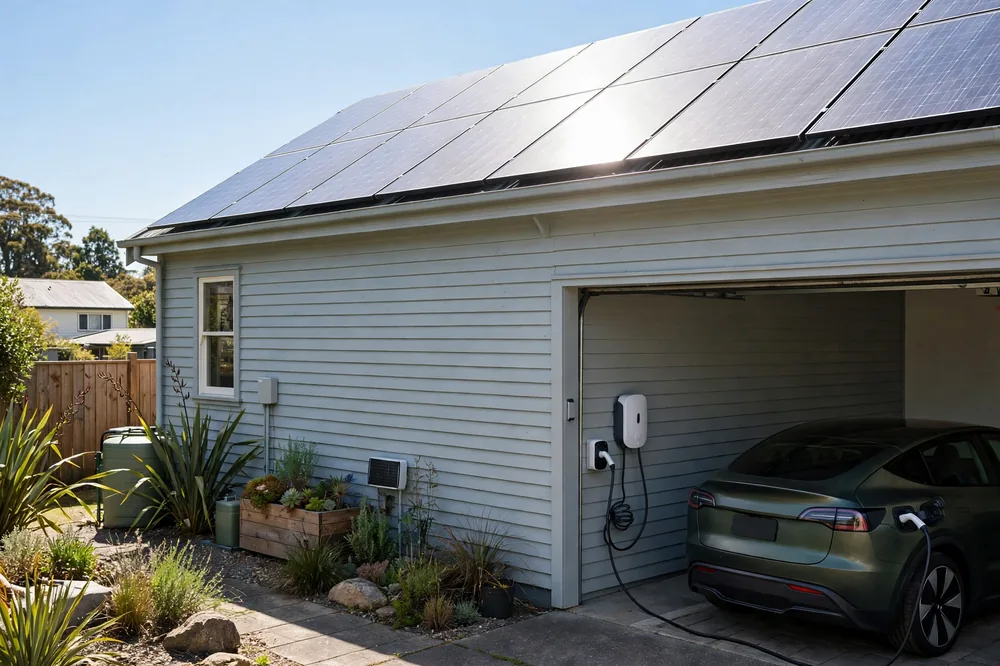
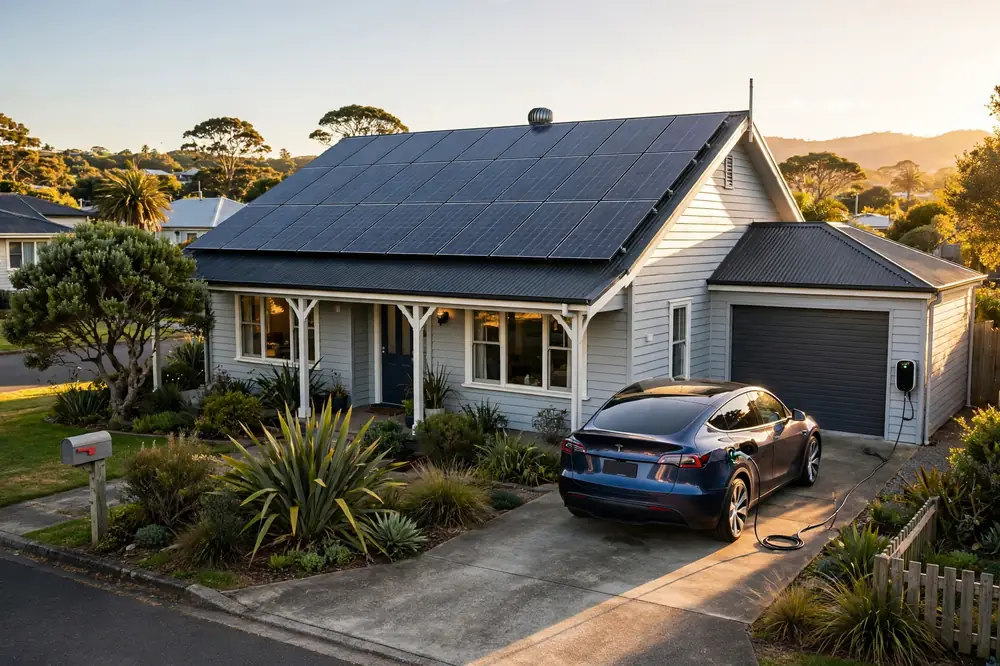
Solar panels and an EV are natural partners, but only if the charger is paired to your generation properly. We connect Tauranga homes with local registered electricians who set up solar-aware charging, so more of your driving runs on your own roof.

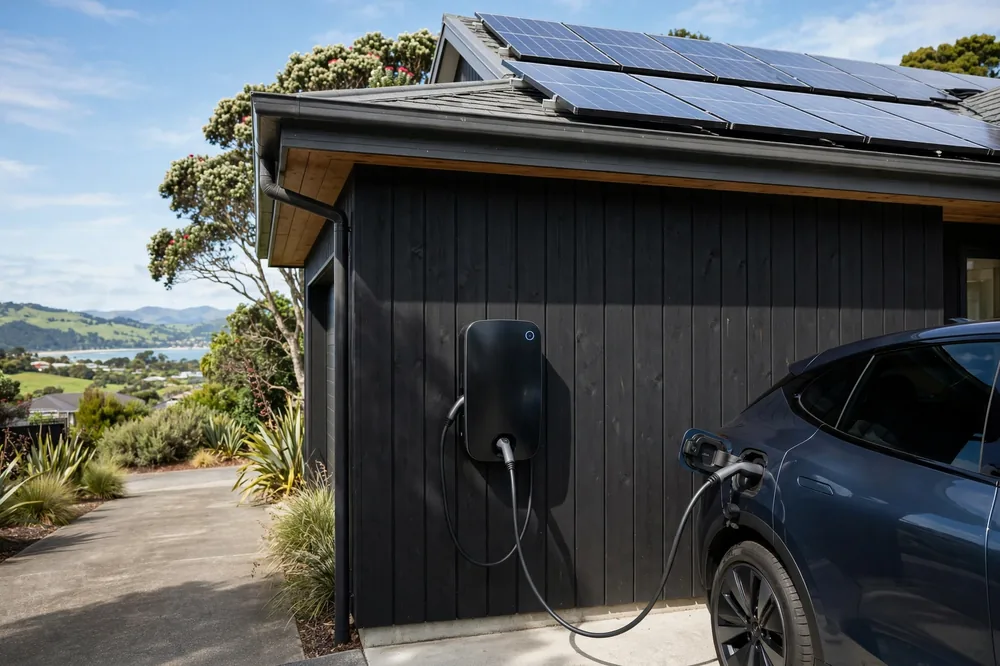
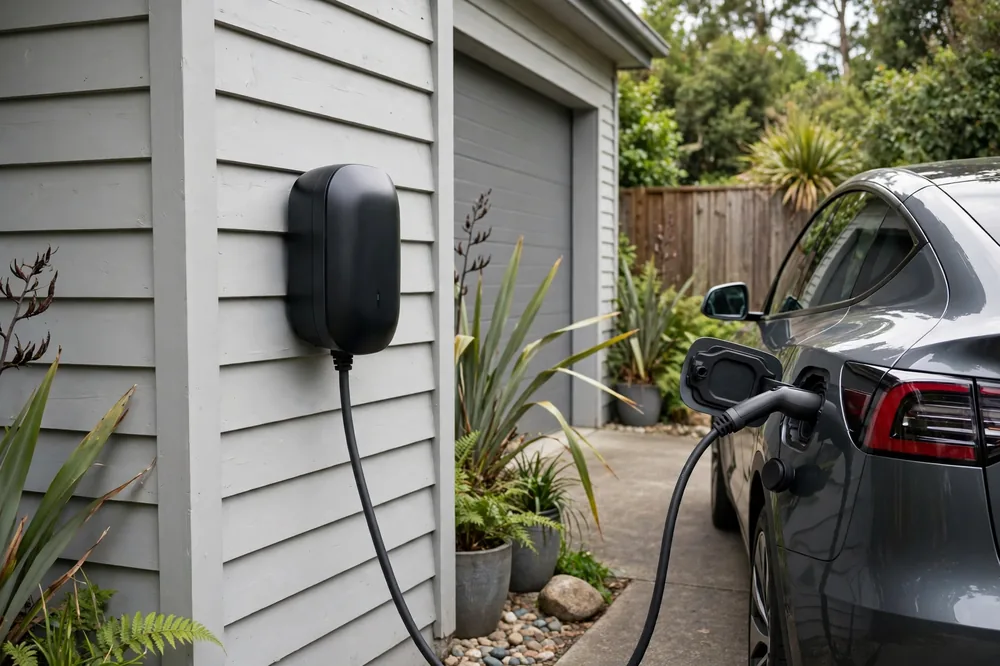
Solar EV Charger Pairing — Tauranga home installation detail
Solar EV Charger Pairing

Making your panels and your car work as one system

On its own, a rooftop solar system in Tauranga exports its best midday generation for a modest feed-in rate while the household is at work. On its own, an EV charges overnight from the grid. Pair them thoughtfully and the picture changes: surplus sunshine that was worth a few cents exported becomes kilometres in your battery worth far more at petrol prices around $3.50 a litre. Pairing is the design and configuration work that makes the charger watch your generation and household load, then charge when your own power is genuinely spare.

Pairing is charger-agnostic in principle but feature-dependent in practice. Solar-ready chargers such as myenergi zappi and suitable Evnex and Wallbox setups use current sensors at the switchboard to measure import, export and generation, then modulate charging to match surplus. A basic charger can still benefit through simple timed charging during peak sun hours, but it cannot chase clouds or respond when the hot water and heat pump switch on. Your installer will assess which level of pairing your existing charger, or the one you are choosing, can honestly deliver.

The Bay of Plenty is a favourable place to do this. Tauranga homes enjoy high sunshine hours by New Zealand standards across the year, and the city's spread of standalone homes in suburbs like Bethlehem, Papamoa and Ohauiti means good unshaded roof area is common. Add New Zealand's 230V supply, Type 2 vehicles and a plug-in fleet that reached roughly 155,000 by August 2026, and solar pairing is fast becoming the default way Tauranga EV owners set up home charging rather than an enthusiast extra.
What's included

What This Service Includes

Solar and charger compatibility check

Your installer reviews your inverter, array size, switchboard arrangement and existing or planned charger, confirming whether true surplus diversion, timed solar charging, or a charger change is the right path. You get a realistic prediction of solar charging share based on your export history and the car's daytime availability.

Surplus diversion configuration

For compatible chargers, sensors are fitted and thresholds configured so charging starts when export rises, follows generation through the day, and pauses or supplements sensibly when clouds pass. Settings balance solar purity against the car actually being charged by the time you need it for the school run or commute.

Home battery coordination

If you own a battery, pairing decides priorities: charge the car from surplus first, fill the battery first, or split by time of day and season. Configuration also guards against the classic fault of a home battery emptying itself into the car overnight. Your installer aligns charger and battery settings as one system, not two rivals.

Hot water and load priorities

Solar households often divert surplus to hot water as well. Pairing sets the pecking order between cylinder, battery and car, and caps EV charging so household peaks never overload the supply. This whole-home view follows the spirit of SNZ PAS 6011:2023: EV charging integrated safely with everything else the house is doing electrically.

Timed charging for basic chargers

Not every charger has live solar tracking. Where yours does not, your installer can still pair by schedule: daytime windows matched to your array's typical peak, seasonal adjustments, and overnight off-peak backup so the car is never caught short. It is a simpler pairing, honestly presented, that still captures much of the available value.

Monitoring and seasonal tuning

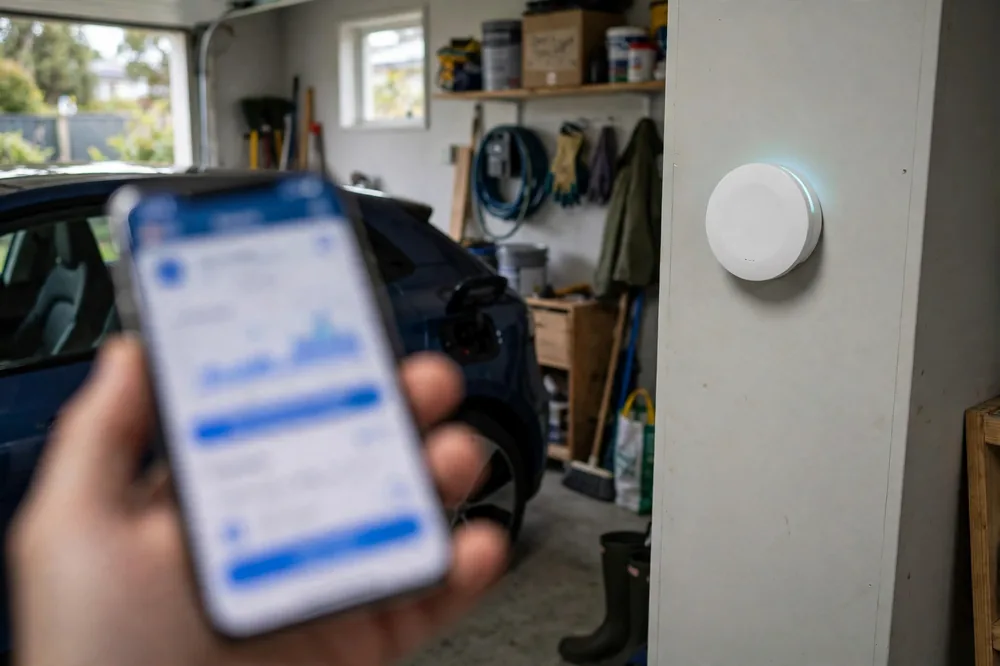
Pairing finishes with monitoring set up so you can see generation, export and charging on your phone, plus guidance on seasonal tweaks as Tauranga daylight shifts between summer and winter. A short follow-up conversation after your first month helps refine thresholds using your real data rather than install-day assumptions.

The process

How It Works, Step by Step

1

Share your solar details

Send your suburb, inverter size and brand, any battery details, your vehicle and when it is usually home, plus switchboard and inverter photos if handy. Daytime availability of the car is the single biggest predictor of solar charging success, so be candid about work patterns.

2

Pairing design and quote

A Tauranga registered electrician partner designs the pairing: sensors, charger settings or charger supply if needed, and any switchboard work, quoted itemised. Expected solar share is explained in ranges, not promises, using your generation and export patterns as the evidence base for the recommendation.

3

Install sensors and configure

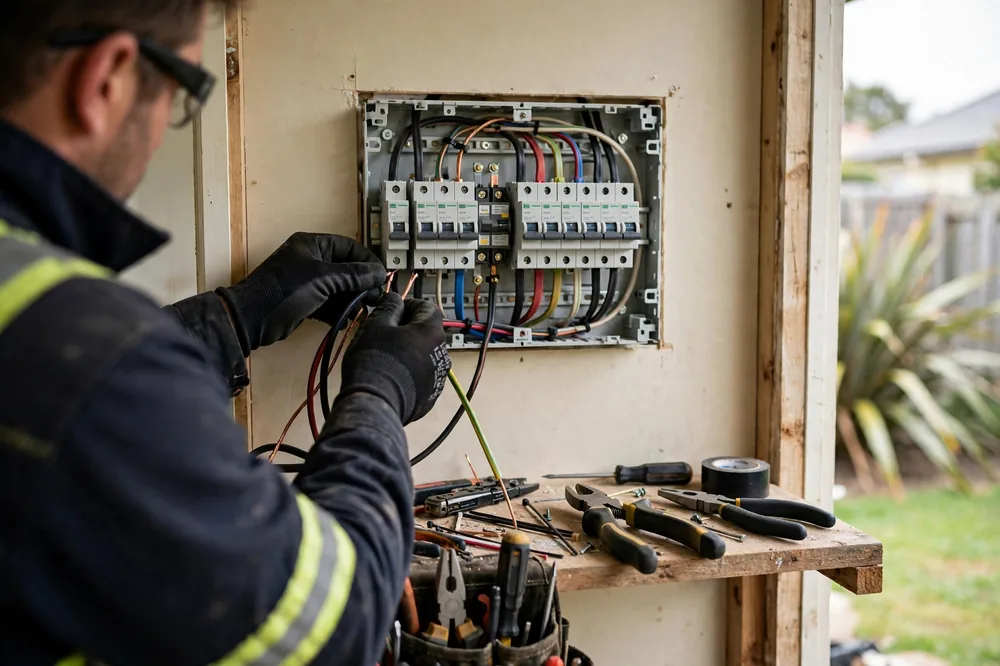
On the day, the electrician fits current sensors, connects or configures the charger, and sets diversion thresholds, priorities and schedules. Any new charger circuit is installed with correct Type B RCD protection and certified with a Certificate of Compliance as New Zealand rules require.

4

Live solar test

With the sun up, you watch the system work: charging rate rising and falling with surplus, pausing when household loads spike, and switching to a boost when you request one. Readings are cross-checked against your inverter display so the numbers you monitor later can be trusted completely.

5

Drive and review

After a few weeks of real driving, review your app data: how many kilowatt-hours came from the roof, and where grid top-ups still occur. Contact us for a settings review with your installer partner if the pattern differs from expectations, especially heading into a new season.

In depth

Batteries, expectations and the Tauranga sunshine advantage

A home battery changes pairing strategy rather than removing the need for it. Without a battery, the car itself is your biggest daytime load and the natural home for surplus. With a battery, the question becomes sequencing: many Tauranga households fill the car first on high-generation days because driving displaces expensive petrol, then let the battery take the remainder for evening household use. Others protect the battery for night-time home loads and give the car only genuine excess. There is no universal right answer; your installer will model both against your tariff and routine.

Set expectations seasonally. Summer in the Bay of Plenty delivers long days and strong generation, and a car home during the day can take most of its energy from the roof. Winter delivers less, and even a well-paired system leans on off-peak grid charging for a larger share. That blend is still the lowest-cost, cleanest way to run the car across a year. What pairing eliminates is the worst outcome: exporting at midday for cents and repurchasing the same energy at night at full retail, which is what unpaired systems quietly do daily.

Also plan pairing with your next steps in mind. A second EV, a growing array or a battery added in two years all interact with today's sensor placement and switchboard capacity. Installers who know your property can design the first pairing to welcome those additions, keeping conduit, board space and monitoring ready. In a fast-growing city like Tauranga, where homes regularly gain heat pumps, spas and second cars, that forward thinking is the difference between a system and a series of expensive corrections.

Problems it solves

Problems This Service Solves

01

Panels exporting, car charging from grid

The classic unpaired failure: your feed-in earnings are small while your overnight charging bill is not. Live surplus diversion directly attacks this mismatch, moving charging into solar hours whenever the car is home, and reserving grid charging for genuine shortfalls and cheap off-peak windows.

02

Battery draining into the car

Poorly coordinated systems let the EV treat the home battery as a free reservoir, cycling expensive stored energy into the car and leaving the house exposed in the evening. Correct priority and threshold settings during pairing keep each store doing the job it was bought for.

03

Solar charger that never diverts

A solar-ready charger with incorrectly placed or unconfigured sensors behaves like a basic unit while its owner blames the weather. Verified sensor readings and a live generation test at install prove diversion is working before the installer leaves, not months later when the power bills disappoint.

Good questions

FAQs — Solar EV Charger Pairing

Still deciding? Get in touch and we will point you to the right local electrician for your home and your EV.

It depends on array size, season and whether the car is home in daylight. Daytime-home Tauranga households with a moderate array often cover most fair-weather driving from surplus in summer and a smaller share in winter. Your installer estimates a range from your inverter's export data rather than quoting a single flattering percentage.
No. The car is itself a large battery, and surplus diversion works well without home storage whenever the vehicle is plugged in during the day. A battery adds flexibility for cars away at work, storing midday surplus for evening use or charging, but it is an optional layer, not a prerequisite for pairing.
Chargers with live current sensing, notably myenergi zappi and suitable Evnex and Wallbox configurations, deliver true surplus-following charging. Basic chargers pair by timer only. If you are choosing a charger now and solar matters to you, tell us upfront so we connect you with installers supplying genuinely solar-capable models and sensors.
Solar charging rates vary with your surplus, from a gentle trickle to the full 7.4kW when generation is strong and the house is quiet. Most owners blend modes: solar through the day, with an automatic or manual off-peak boost making sure the battery reaches the level they need by morning. Pairing settings make that blend automatic.
Often yes, if your charger supports external sensing or scheduling, sensors and configuration can be added when panels are installed. If your charger lacks those inputs entirely, options narrow to timed charging or a charger upgrade. An installer assessment of your exact model gives a definite answer before you commit to solar on assumed compatibility.
Keep exploring

Related Services

Home EV Charger Installation Tauranga

Home EV Charger Installation

A dedicated 7.4 kW wall charger at home, wired, tested and certified by a registered electrician.

Learn more →
EV Charger Installation Cost Guide Tauranga

EV Charger Installation Cost Guide

What Tauranga homeowners actually pay — charger, labour, cable runs and switchboard work, broken down.

Learn more →
Tesla Wall Connector Installation Tauranga

Tesla Wall Connector Installation

Tesla Wall Connector supply and installation for Tesla and other Type 2 EVs, done properly.

Learn more →
Evnex Charger Installation Tauranga

Evnex Charger Installation

NZ-made Evnex smart chargers installed by local electricians who know the product.

Learn more →
Wallbox Charger Installation Tauranga

Wallbox Charger Installation

Compact Wallbox Pulsar chargers with app control — a tidy fit for smaller garages.

Learn more →
Zappi Charger Installation Tauranga

Zappi Charger Installation

Charge your EV with your own solar surplus using the myenergi zappi eco charger.

Learn more →
Switchboard Upgrade for EV Charging Tauranga

Switchboard Upgrade for EV Charging

Older switchboard? Capacity checks, upgrades and Type B RCD protection for safe charging.

Learn more →
Commercial EV Charger Installation Tauranga

Commercial EV Charger Installation

Workplace, motel and fleet charging for Tauranga businesses, with load management.

Learn more →
Ready when you are

Need Solar EV Charger Pairing in Tauranga?

Tell us about your home and your EV — we will connect you with a registered electrician who handles exactly this work.

☎ Call Now
Get in touch

Contact Us About Solar EV Charger Pairing

No forms and no obligation. Call or email, tell us your suburb, your EV and where you park — we connect you with a local registered electrician who can quote the job properly.

Tauranga EV Charger Installation is a referral service, not an installation company. We connect Tauranga homeowners and businesses with independent local registered electricians who carry out EV charger installations. All installation work, certificates and warranties are provided by the electrician who does your job.

☎

Call us

Contact us — the fastest way to get matched with an installer.

✉

Email

rankandrent2+ev-charger-tauranga@gmail.com
Send photos of your switchboard and parking spot if you have them — it speeds up quoting.

🕗

Hours

Mon–Fri: 8 AM–6 PM · Sat: 9 AM–4 PM · Sun: Closed (NZ Time)

📍

Coverage

Tauranga and the Western Bay of Plenty, including Papamoa, Mount Maunganui, Bethlehem, Te Puke, Ōmokoroa and Katikati.

☎Get connectedCall Now