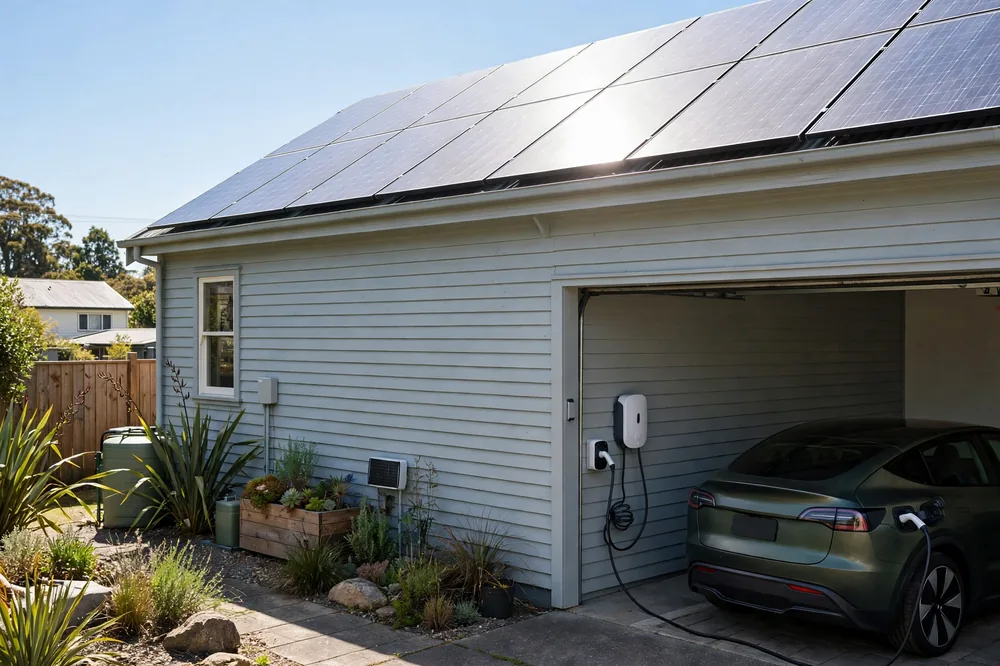
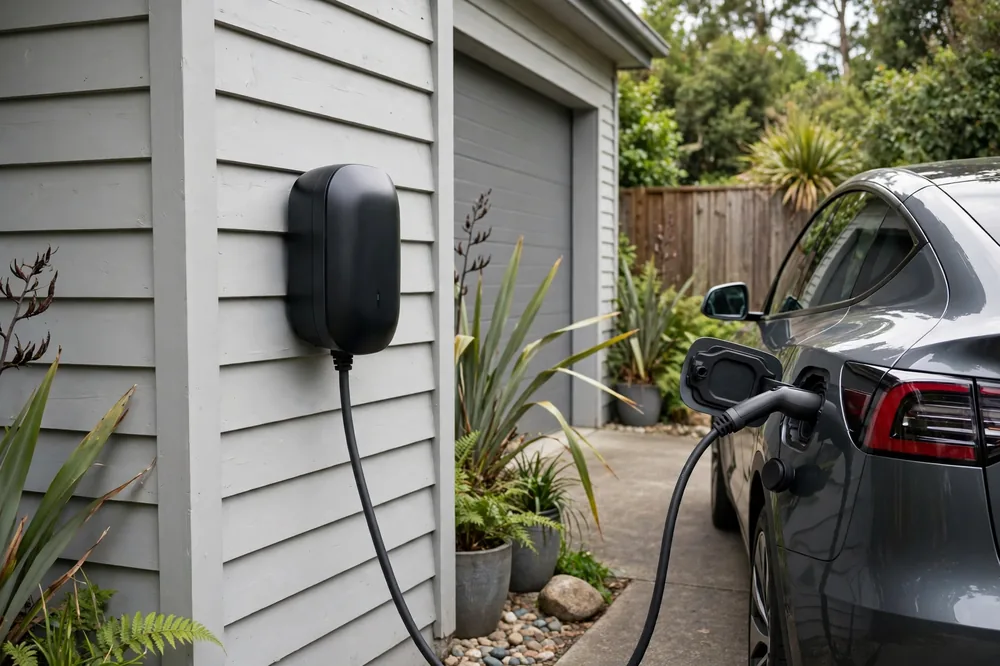
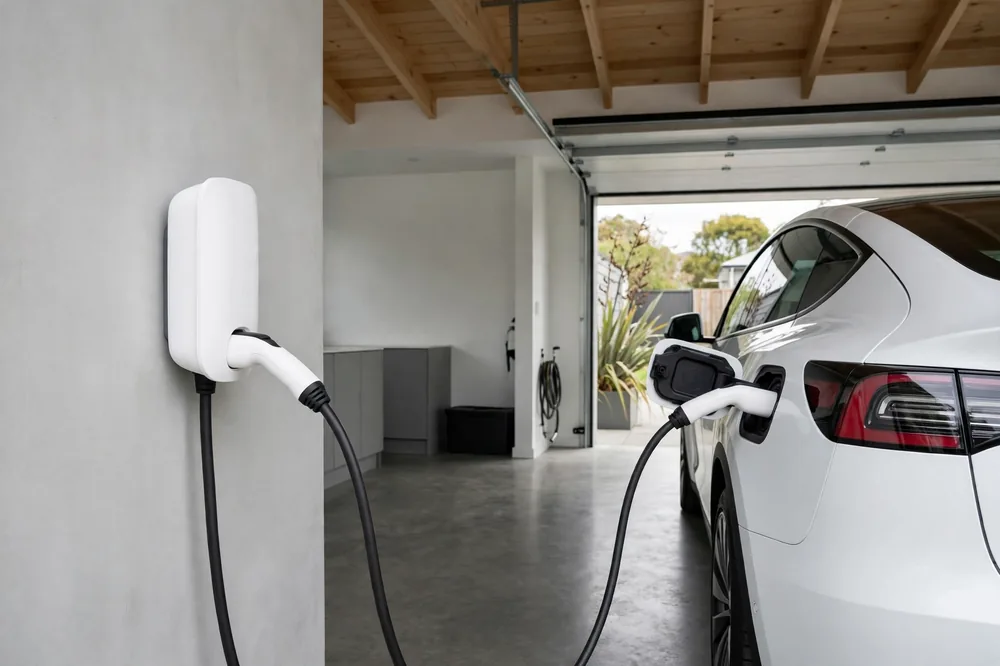
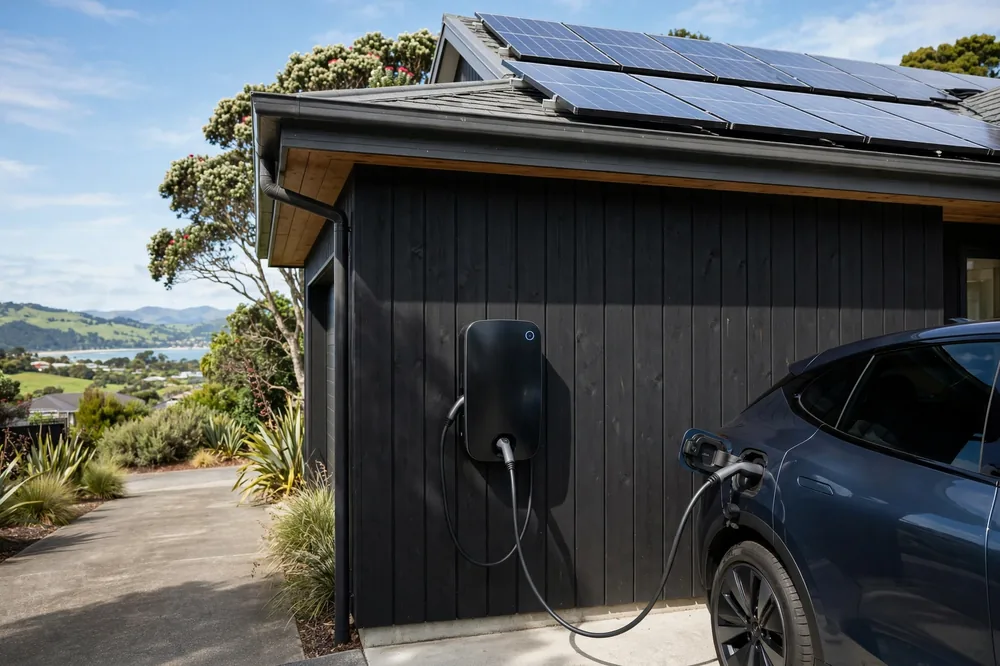
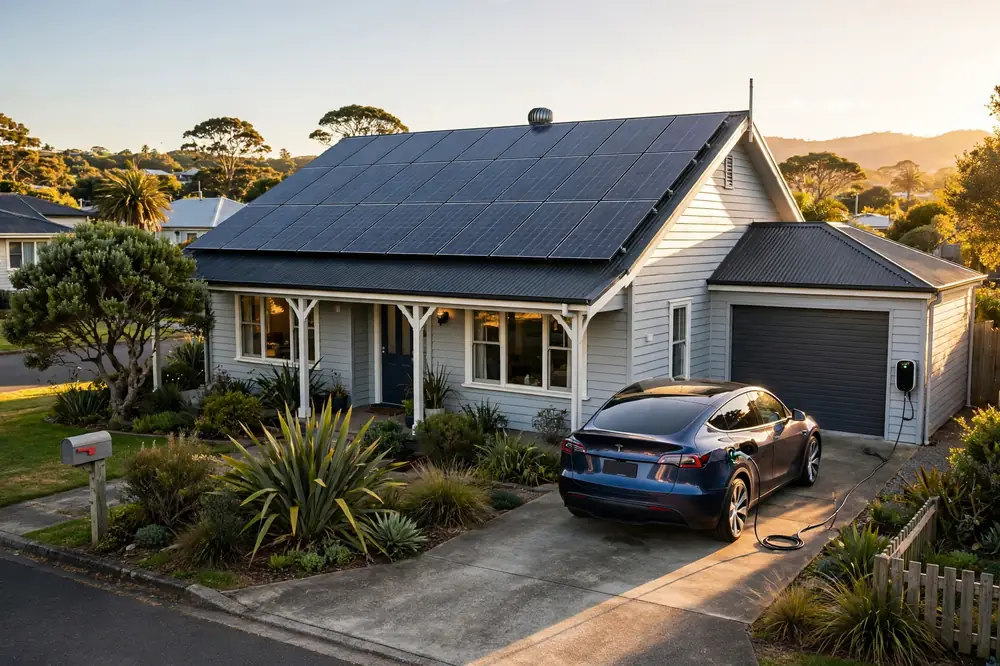
Tauranga and the wider Bay of Plenty enjoy high sunshine hours by New Zealand standards, which genuinely favours solar charging, but honesty matters more than hype. In summer, a moderate array can cover a commuter car's daily energy entirely from surplus if the vehicle is home during the day. In winter, shorter days, lower sun angles and higher household heating loads shrink the surplus, and most owners blend Eco mode solar with overnight off-peak grid charging. A well-set zappi handles that blend automatically; it does not repeal the seasons, and any installer promising year-round free driving should be questioned.
Working patterns decide results as much as weather. A car that leaves Pyes Pa at 7am and returns at 6pm sees little weekday sun, so weekend daytime charging and overnight off-peak top-ups carry the load, with zappi still capturing holiday and work-from-home days. Retirees, shift workers and home-based workers in Tauranga often capture far more solar per week. Your installer can look at your inverter's export history and your routine, then predict a realistic solar share before you spend anything on the charger.
Zappi also future-proofs the wider system. Because it coordinates with batteries and hot water diversion, owners who start with panels and a car can add storage later without replacing the charger. With New Zealand's plug-in fleet around 155,000 vehicles in August 2026 and still climbing steeply, Tauranga homes that organise solar, water and transport energy together will feel the petrol price, currently around $3.50 a litre, far less than homes treating each appliance as a separate island.